Kids' coding in short weekly lessons
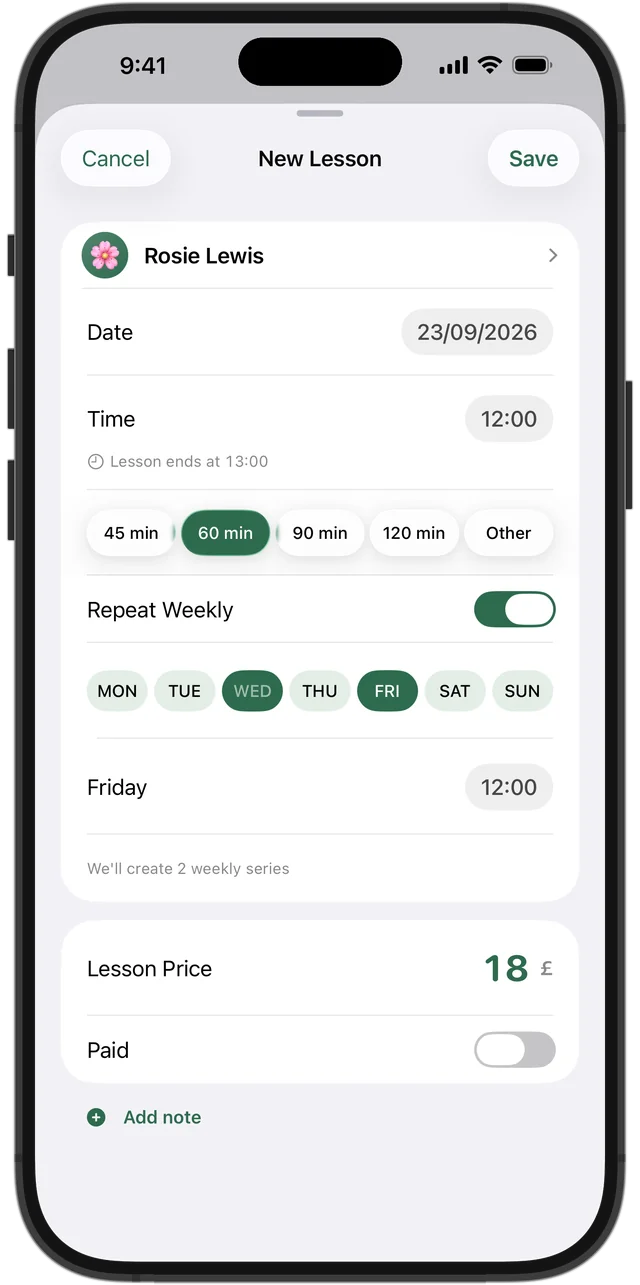
Younger children do best with 45 minutes a week, and parents usually pay by the month. Add the child once with ‘Repeat Weekly’, top up the balance when the parent pays, and each lesson is paid automatically as it happens.
Half-term coding clubs work as group lessons: four children building the same game, each with their own price, payment and attendance. Give the group a name and colour so it stands out in the week.
GCSE and A-level Computer Science
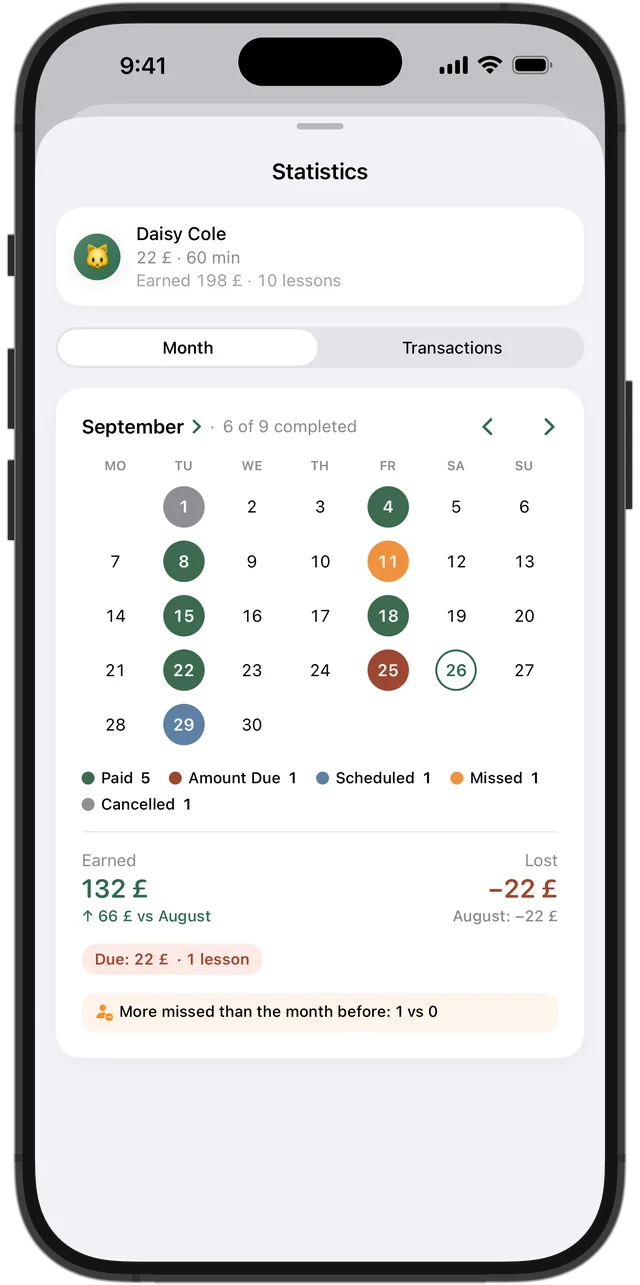
GCSE students need both programming practice and exam technique for the written papers. A-level students write a substantial programming project, and the months before it's due are when they ask for an extra session a week – add a weekday to their series, then end it after the hand-in. Each student's month statistics show how many lessons they've had and how the month compares with the last.
Try it free for 14 days · No card required. Subscribe only once the app has proven it's worth it to you.
Download on the App Store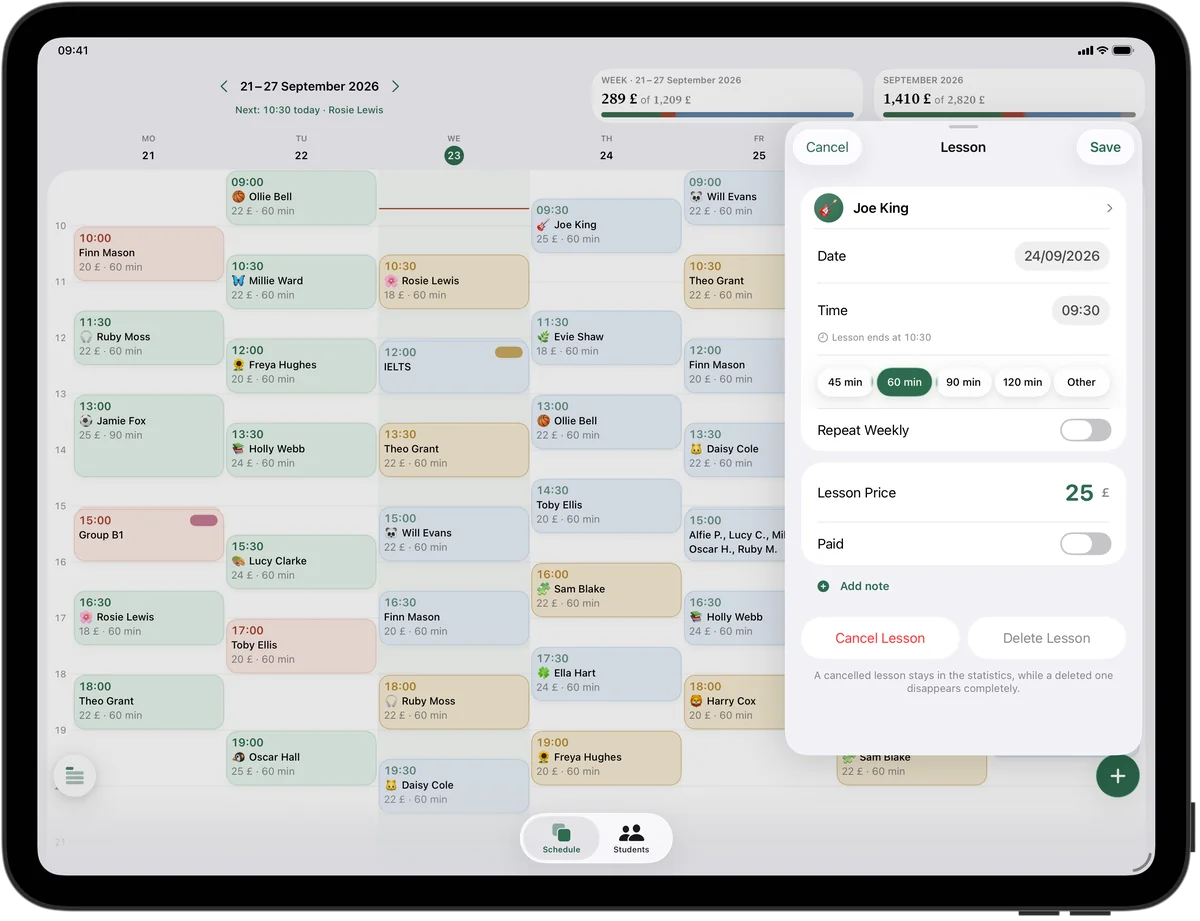
Adults retraining, paying for themselves
Adult learners often buy a block of lessons and fit them around work, so their lessons are one-offs rather than a fixed weekly slot. Tap a free hour in the grid to add each lesson, or move one with ‘This Lesson’. Their payments go onto the balance and pay for lessons in order; when the block runs out, they appear among those who owe you.
Learners abroad, paid in other currencies
Coding lessons travel well over a video call, so you may have students in Dublin paying in euros or in the US paying in dollars. Each student has their own currency, and your monthly totals appear in pounds with an exchange rate you can edit.
Next to your editor on the Mac
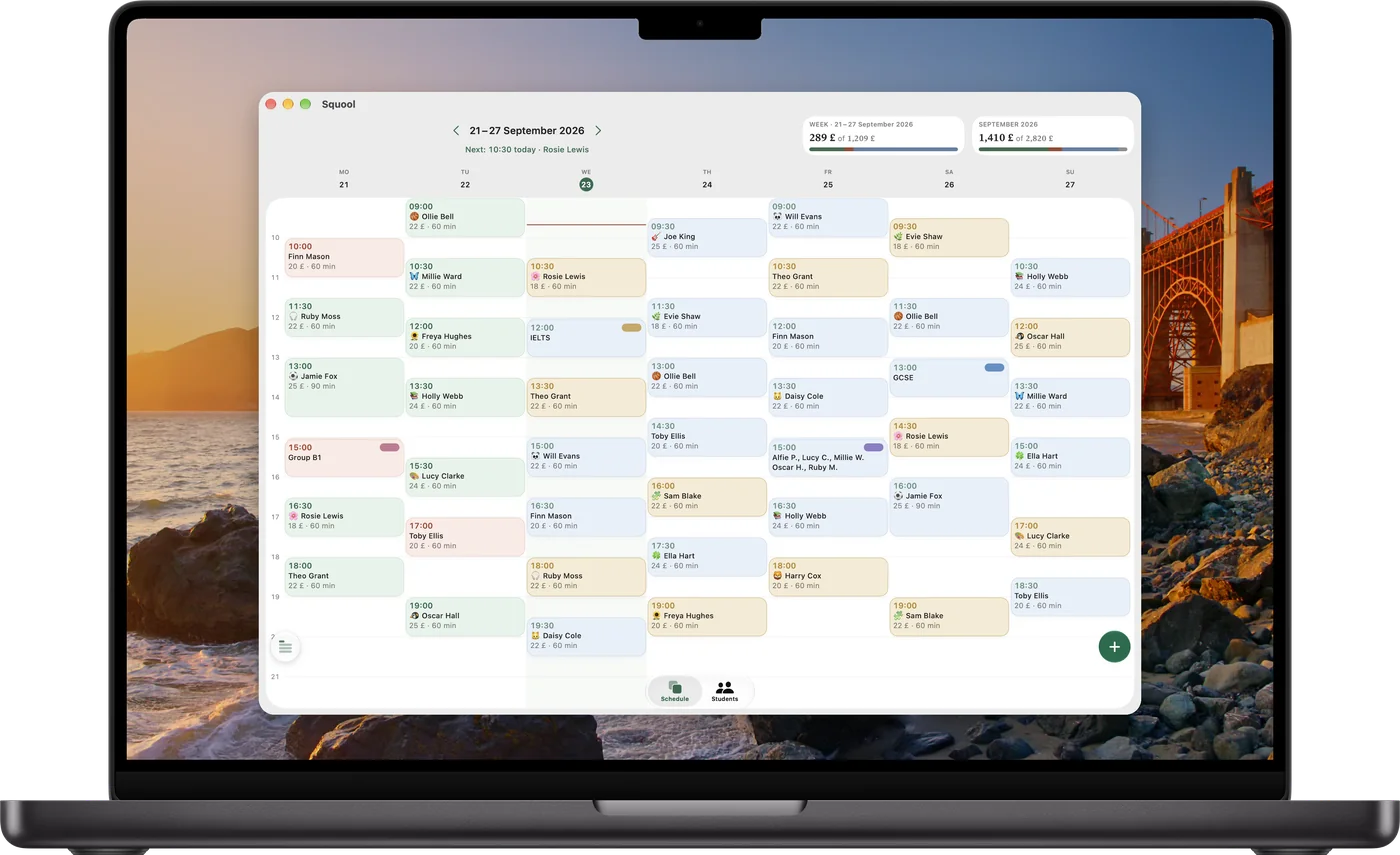
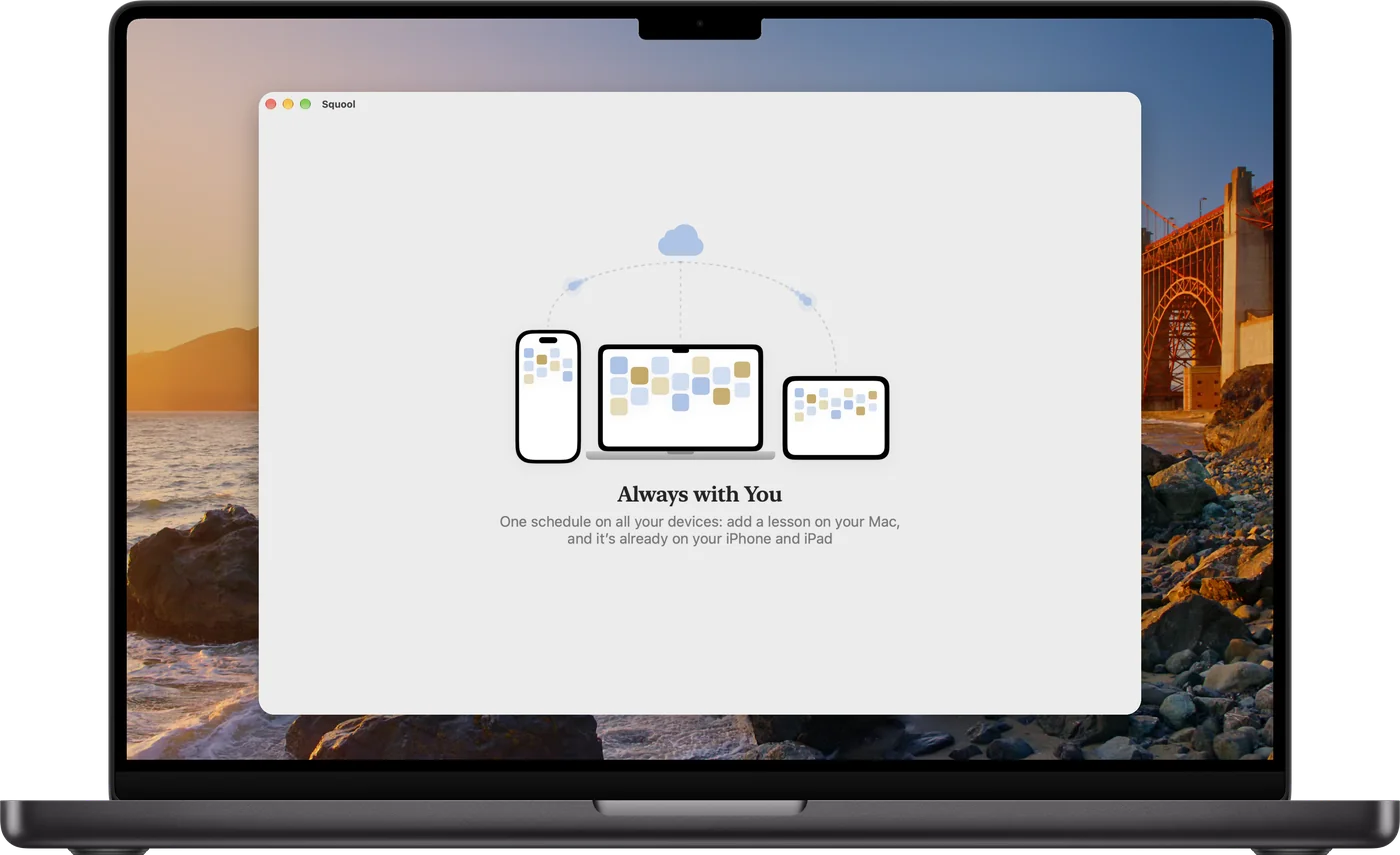
During a lesson your screen is busy with the editor and the call. Squool's Mac window sits next to them, and it syncs automatically with your iPhone and iPad through your own iCloud – no account, no login. Your students' data stays on your devices and in your iCloud; the developer can't see it.
Squool is for one tutor working alone; it isn't a platform for a coding school with several teachers. Full access is free for 14 days, no card needed.
Questions and answers
Is there an app for coding tutors to manage students and lessons?
Yes. Squool covers a single tutor's timetable, student balances, currencies and monthly income on iPhone, iPad, Mac and Apple Watch.
Can I run a half-term coding club where each child pays separately?
Yes. A group lesson has an individual price for each child, with payments and absences marked per child.
Does Squool run on Windows, Android or in a browser?
No. It's a native app for iPhone, iPad, Mac with Apple silicon and Apple Watch.
Can an adult student abroad pay me in euros?
Yes. Each student can have their own currency, and your totals are converted to pounds at a rate you set.
Does Squool connect to Zoom or send lesson links?
No. You keep using your usual video app; Squool takes care of the timetable and payments.
Read also
Online tutors
Tutor over Zoom, Teams or Google Meet? Track your timetable, students abroad paying in GBP, EUR or USD, and monthly income on iPhone, iPad and Mac.
Maths & science tutors
For maths, physics, chemistry, 11+ and GCSE/A-level tutors: weekly timetable, student balances, payments and income on iPhone, iPad and Mac.
Other currencies
Online tutor paid in pounds, euros and dollars? How to keep each student's balance in their own currency and see your total income in pounds.
Try it free for 14 days
No card required. Subscribe only once the app has proven it's worth it to you.
Download on the App Store