Mostly younger pupils, mostly parents paying
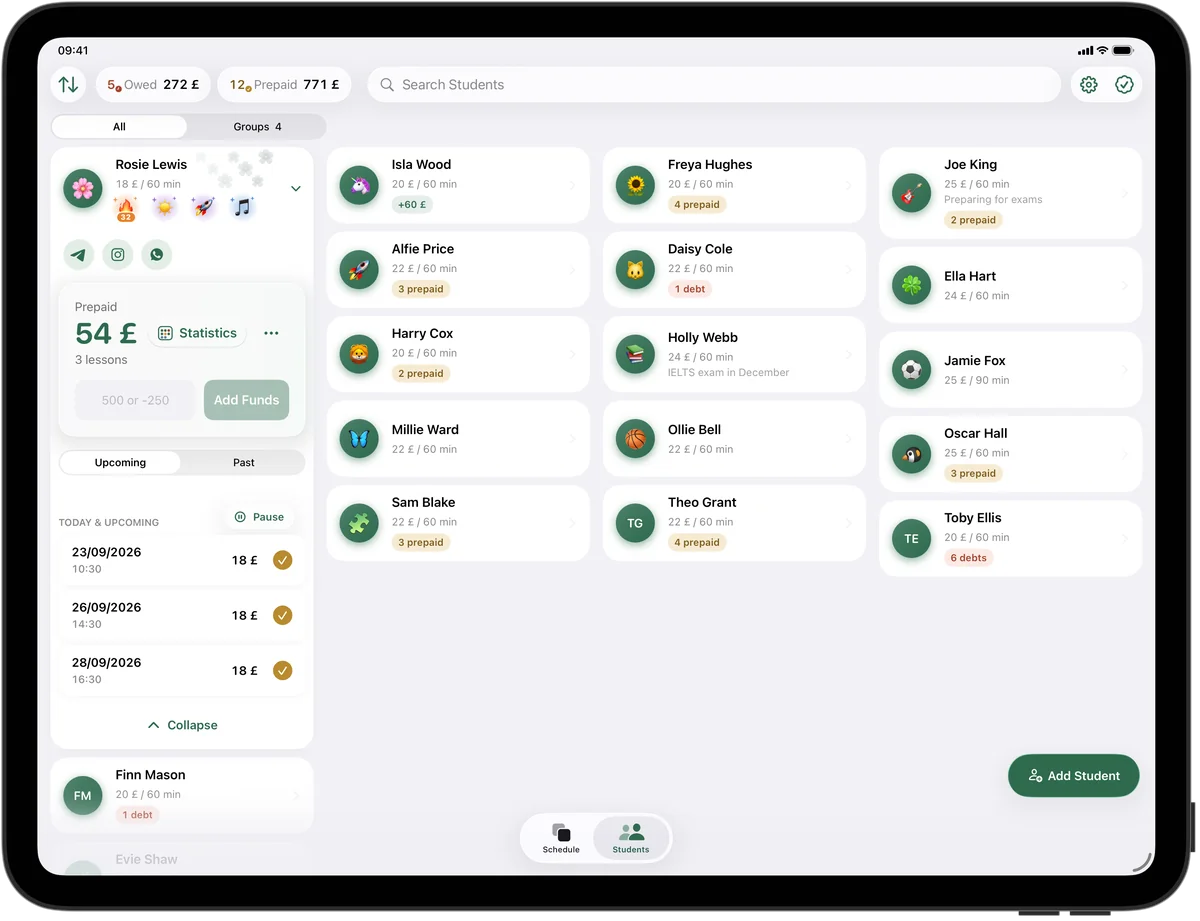
Many English tutors teach primary pupils for 45 minutes a week, so lessons stack up neatly after school. Parents pay by the month or by the half-term; tap ‘Add Funds’ with the whole amount and the lessons are paid one by one as they happen, oldest first.
Brothers and sisters are two separate pupils, each with their own price, balance and history – even when they come one after the other on the same afternoon.
Notes on each pupil: texts, target grade, reading level
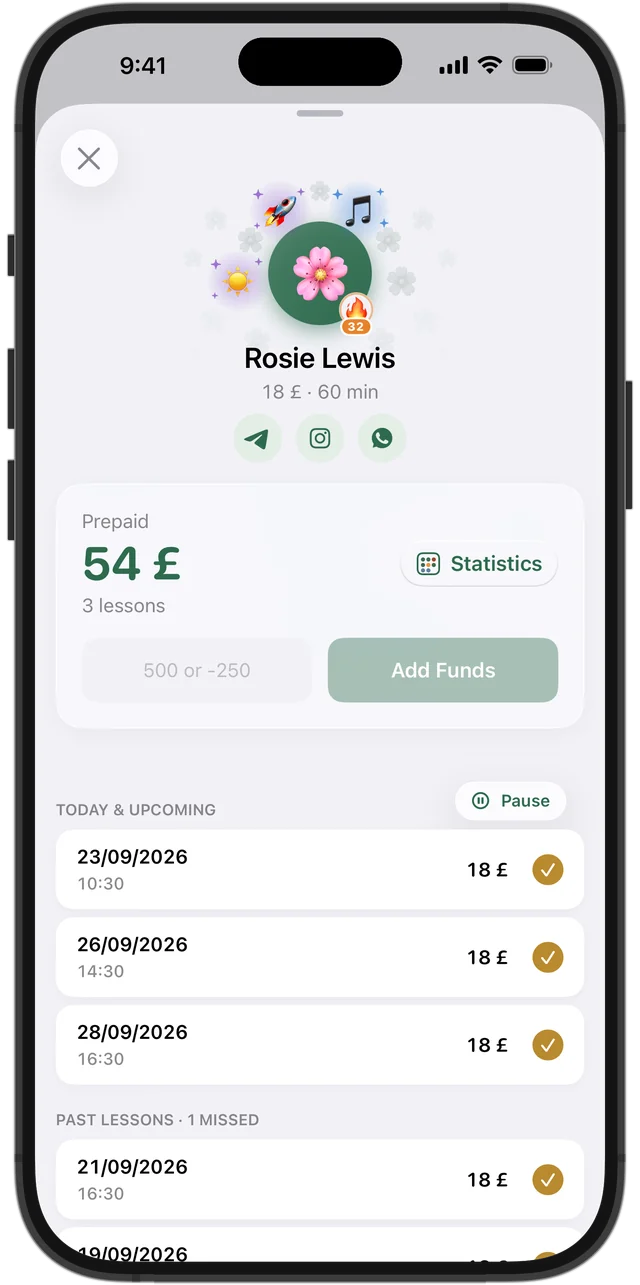
The note on a student card is where you keep what you'd otherwise forget: ‘AQA Lit – Macbeth, ACC, Inspector Calls, Power and Conflict’, ‘target 7’, ‘11+ for GL in September’, ‘reads aloud too fast’. Contacts sit on the same card: the parent's phone, WhatsApp and email, one tap away.
Try it free for 14 days · No card required. Subscribe only once the app has proven it's worth it to you.
Download on the App Store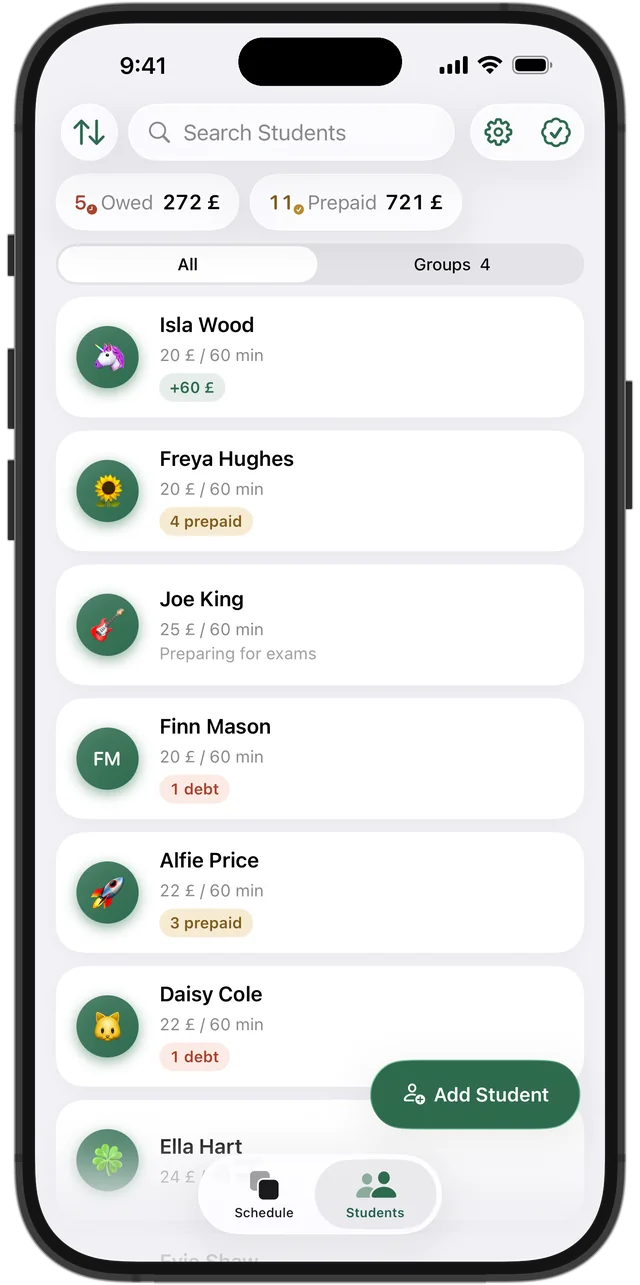
Who has paid, without asking around
The top of the students screen always shows who owes you and who has paid ahead, and you can sort the list by debt. On the weekly grid each lesson is coloured by its payment state, so on a Friday you can see which families to remind before Monday.
11+ season and the GCSE run-in
11+ candidates often go to two lessons a week over the summer before the test in September: add another weekday to their series, each with its own time, and end the series after the exam. GCSE English pupils step up between Easter and the Language and Literature papers in May and June – the same series simply grows a day for a few months.
Reading is a habit – so is turning up
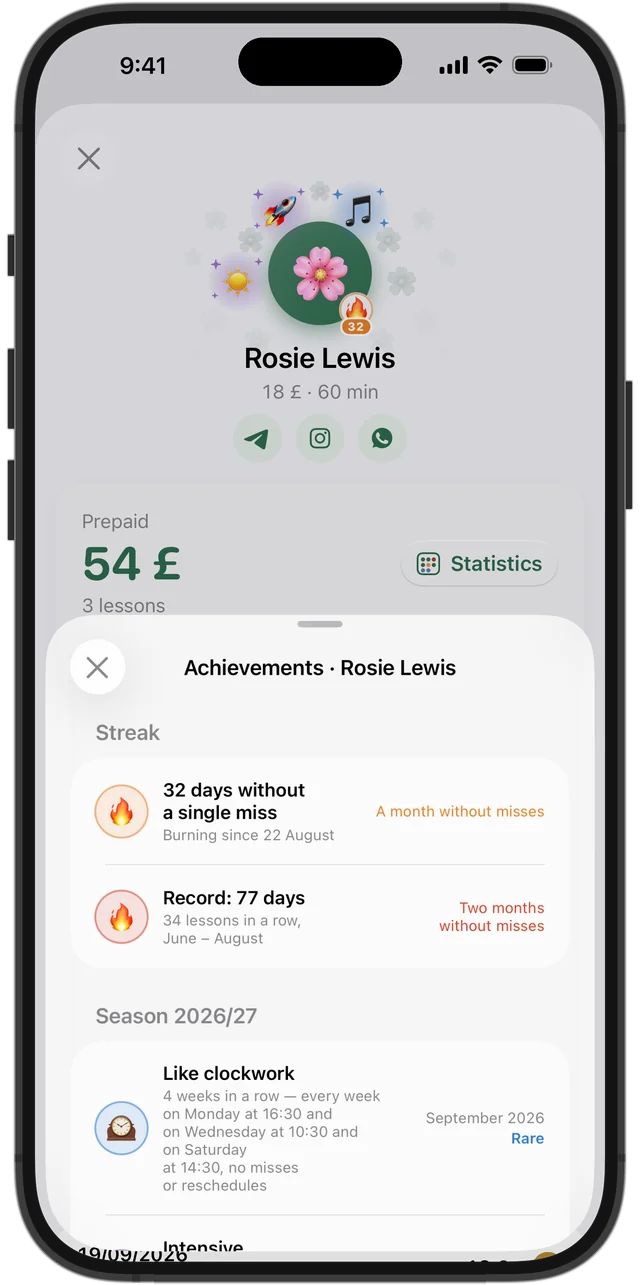
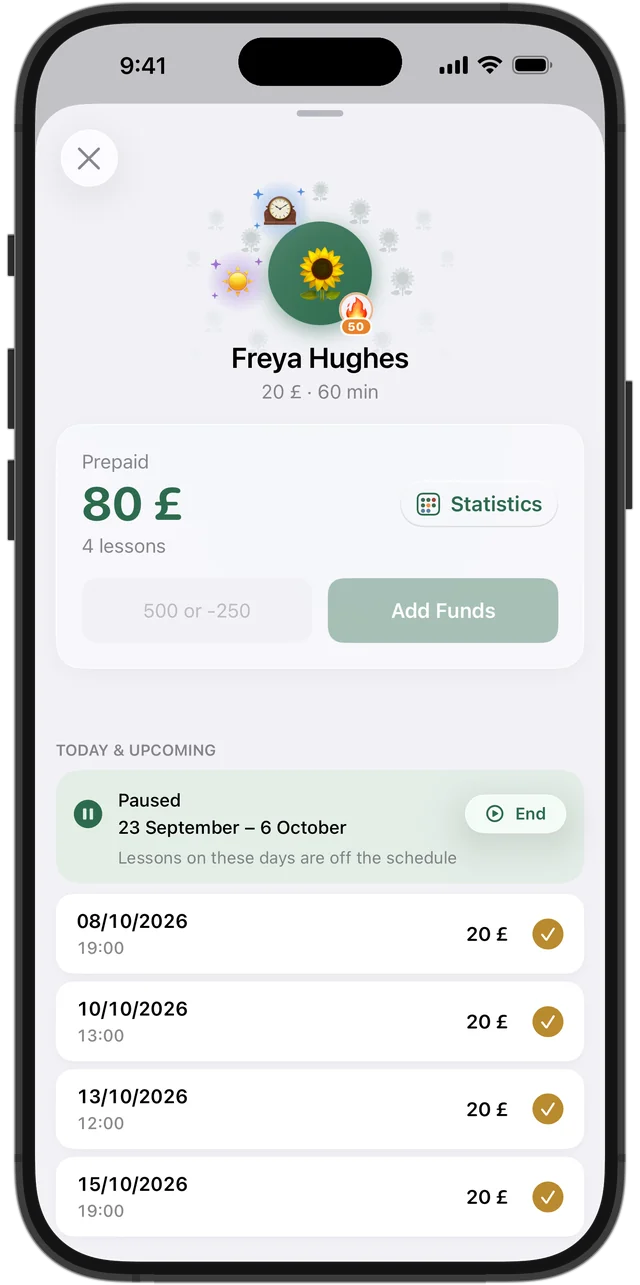
Younger pupils love being noticed. Squool gives achievements on its own: ‘Every week’ when a pupil hasn't skipped a week, ‘Like clockwork’ for the same day and time all month, and a 🔥 streak next to the avatar. It gives you something concrete to praise, which matters a lot to a reluctant reader.
Holidays, pauses and privacy
If a family goes away for two weeks in term time, pause that pupil: their lessons in those dates are removed and prepaid money moves to later lessons. Squool runs on iPhone, iPad and Mac, syncs through your own iCloud and keeps your data on your devices; the developer can't see it. Free for 14 days, no card needed.
Questions and answers
Is there an app for English tutors to track pupils and payments?
Yes. Squool gives a private tutor a weekly timetable coloured by payment, a balance per pupil and monthly income, on iPhone, iPad, Mac and Apple Watch.
Can I note which set texts each GCSE pupil is studying?
Yes. Every student card has a note for texts, exam board, target grade or anything else.
How can I see which parents haven't paid this month?
Open the students screen: those who owe you are shown at the top, and you can sort the list by debt.
Can I pause a pupil during a family holiday without losing their weekly slot?
Yes. Pause the pupil for those dates; the lessons in that period are removed, prepaid money is kept, and the weekly lessons carry on afterwards.
Is this page about teaching English as a foreign language?
No – it's about English as a school subject. For ESL, EFL and IELTS tutoring, see the page for ESL and EFL tutors.
Read also
Maths & science tutors
For maths, physics, chemistry, 11+ and GCSE/A-level tutors: weekly timetable, student balances, payments and income on iPhone, iPad and Mac.
ESL & EFL tutors
For ESL, EFL and ESOL tutors in the UK: IELTS and Cambridge prep, adults abroad paying in euros, prepaid lesson packages – on iPhone, iPad and Mac.
Tracking payments
A simple way for UK tutors to track payments: one balance per student, prepaid blocks and termly fees, who owes you and how much. Paper, Excel or an app.
Try it free for 14 days
No card required. Subscribe only once the app has proven it's worth it to you.
Download on the App Store